
Why Do Balinese Hindus Pray for Their Vehicles?
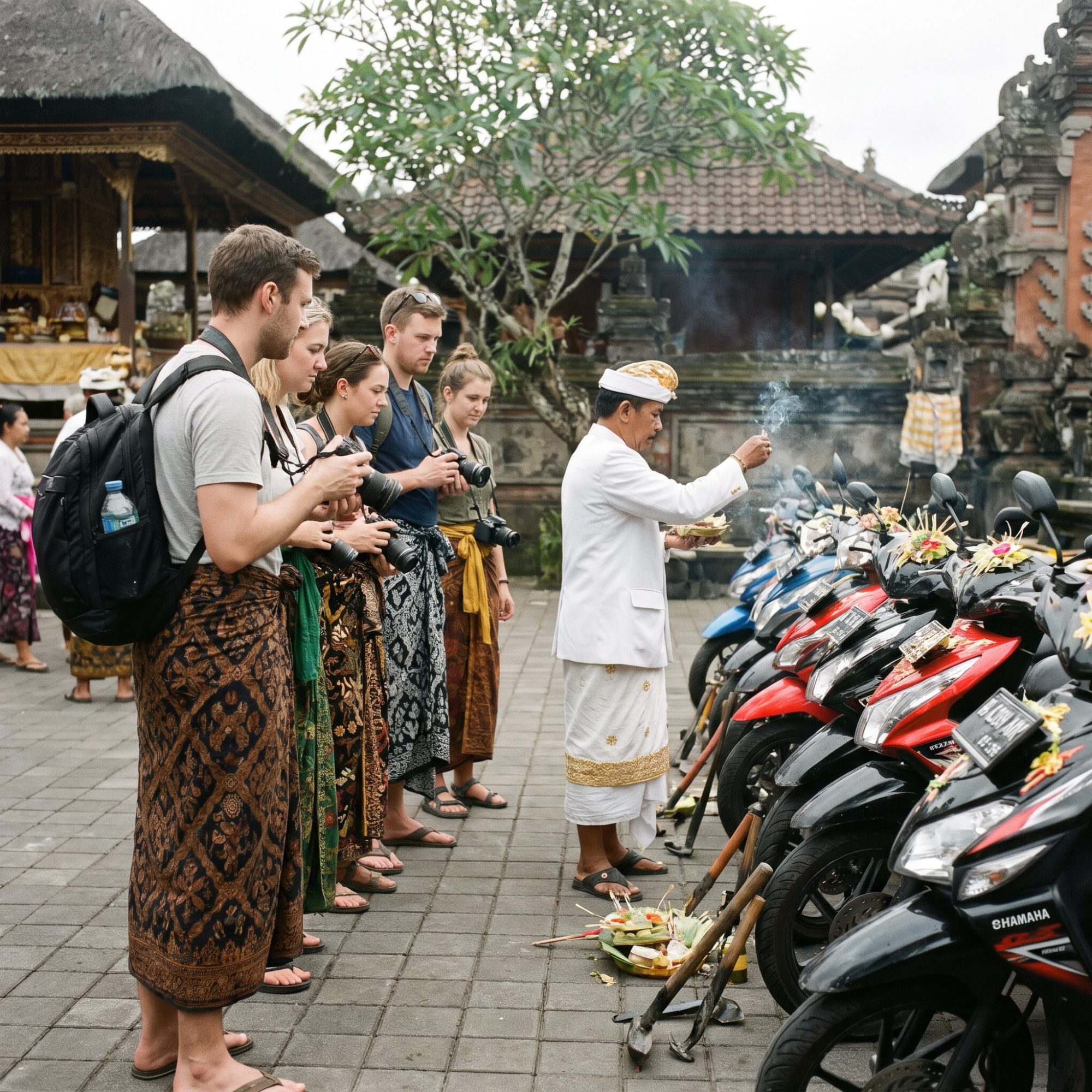
If you spend time travelling around Bali, you may notice something unusual on the dashboards of cars and motorcycles. Small offerings made of flowers, leaves, and other natural materials are often placed near the steering wheel, on the dashboard, or around the vehicle. You may also see cars and motorcycles decorated with traditional offerings during certain religious ceremonies. Sometimes, entire parking areas are filled with vehicles that have been blessed as part of a Hindu ritual. For visitors unfamiliar with Balinese Hindu culture, this may raise an interesting question: Why do Balinese Hindus pray for their vehicles? The tradition is not simply about asking for a vehicle to remain in good condition. It reflects deeper values of gratitude, respect, spiritual balance, and the importance of using the things we depend on responsibly. In Bali, a vehicle is more than just a means of transportation. It is a tool that helps people work, support their families, travel, and carry out their daily responsibilities. Understanding this tradition offers a glimpse into how Balinese Hindu philosophy is reflected in everyday life.
1. A Way of Expressing Gratitude to God
One of the main reasons Balinese Hindus bless their vehicles is to express gratitude to Ida Sang Hyang Widhi Wasa, the Supreme God in Balinese Hindu belief. Vehicles play an important role in modern life. They help people travel to work, transport goods, take children to school, visit family members, and carry out business activities. For many people, a car or motorcycle is also an essential tool for earning a living. Through prayer and offerings, people express appreciation for the vehicle and the benefits it brings to their lives. This practice reflects an important value in Balinese Hinduism: gratitude should not only be expressed for major blessings but also for the everyday things that make life easier. A vehicle may appear to be an ordinary possession, but its usefulness is something worth appreciating.
2. Praying for Safety During Every Journey
Another important reason for blessing vehicles is to pray for safety. Road journeys involve uncertainty. Traffic conditions, weather, road surfaces, and the behaviour of other road users can all affect a person's safety. Through religious ceremonies, vehicle owners ask for protection and guidance so that they may travel safely and return home without harm. For Balinese Hindus, prayer is part of maintaining a spiritual relationship with God and seeking harmony in daily activities. However, these prayers are not a substitute for responsible driving. Maintaining a vehicle, wearing helmets, using seat belts, and following traffic regulations remain essential parts of road safety. The tradition reflects the belief that spiritual devotion and practical responsibility should go together.
3. The Meaning of Tumpek Landep
One of the most well-known ceremonies associated with vehicle blessings in Bali is Tumpek Landep. Tumpek Landep takes place every Saniscara Kliwon Wuku Landep according to the Balinese Pawukon calendar, which follows a 210-day cycle. Historically, Tumpek Landep is associated with the worship of Sang Hyang Pasupati, a manifestation of divine power associated with the sacredness of sharp objects and metal instruments. Traditional objects such as knives, agricultural tools, and ceremonial weapons are among the items honoured during this occasion. Over time, the meaning and practice of Tumpek Landep have also been associated with modern tools and technology made from metal, including cars, motorcycles, and other machines. Vehicles are decorated with offerings and blessed as part of the ceremony. However, the deeper meaning goes beyond the physical object. Tumpek Landep is also an opportunity to reflect on how human beings use knowledge, tools, and technology. The word landep is associated with sharpness. Symbolically, this can also remind people to develop a sharp mind, clear understanding, and wise judgement. In this sense, the ceremony is not simply about asking for a vehicle to function properly. It also encourages people to use the tools available to them responsibly.
4. Why Are Offerings Placed on Cars and Motorcycles?
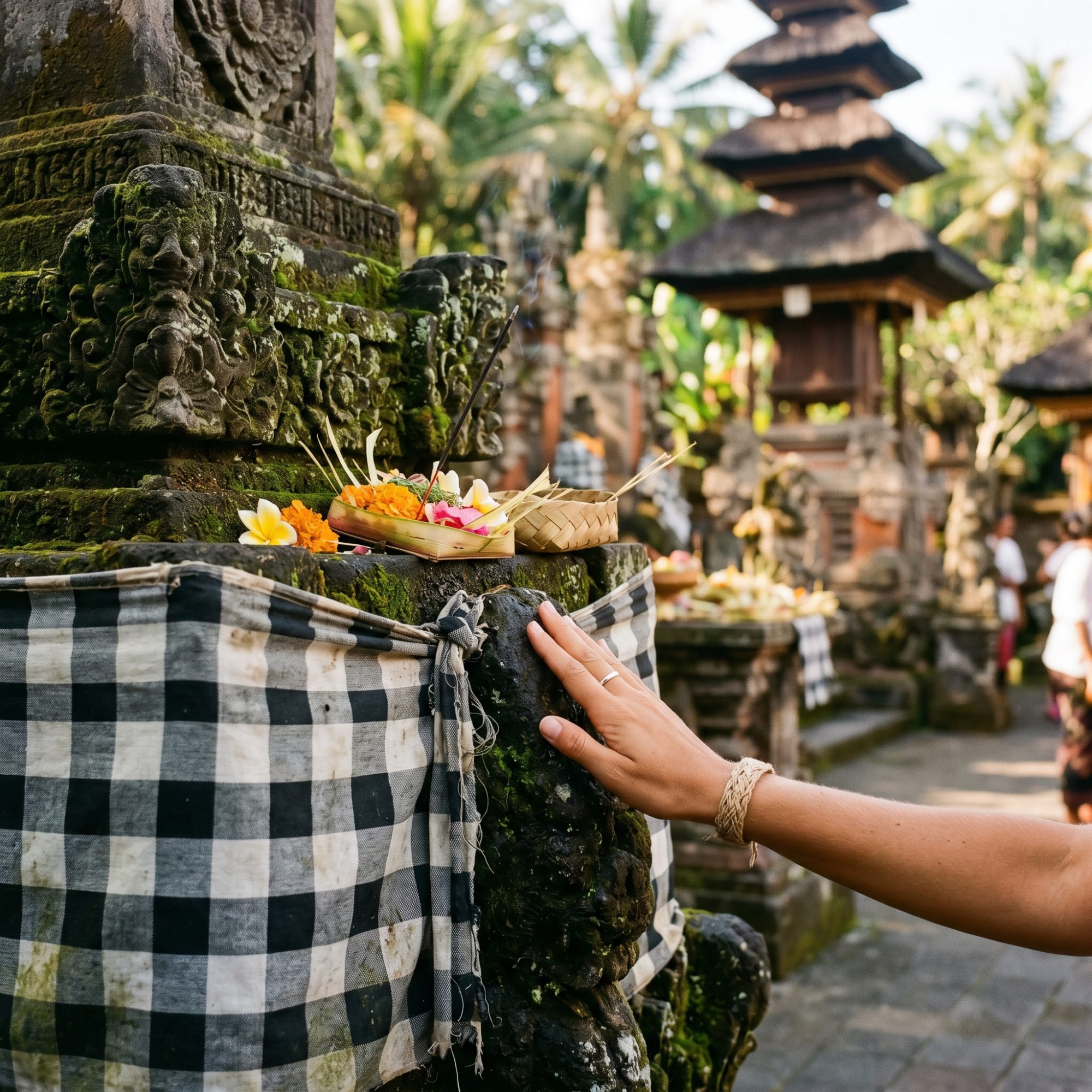
If you look closely at vehicles in Bali, you may notice small offerings placed on the dashboard, near the front of a motorcycle, or around the vehicle during a ceremony. These offerings are part of a broader Balinese Hindu tradition known as banten, which refers to religious offerings prepared for ceremonies and prayers. The form and arrangement of offerings can vary depending on the occasion, family traditions, and local customs. Some commonly recognised elements include:
Canang sari is one of the most familiar daily offerings in Bali. It is generally made using young coconut or palm leaves arranged with flowers and other elements. It represents devotion, gratitude, and an offering to God.
Flowers
Flowers are commonly used in Balinese Hindu offerings. Their colours and arrangement can carry symbolic meanings associated with purity, sincerity, and devotion.
Incense
Incense is used during prayers and ceremonies. Its fragrance and rising smoke are commonly associated with the offering of prayers and spiritual devotion.
Holy water is used in various Balinese Hindu rituals, including purification ceremonies. During vehicle blessings, it may be part of the ritual depending on the ceremony being performed. These elements are not merely decorations. They form part of a meaningful religious practice that connects everyday activities with spiritual values.
5. Vehicles as an Important Part of Everyday Life
In Bali, vehicles are closely connected to people's daily responsibilities. For some, a motorcycle is the main way to travel to work. For others, a car is essential for running a business, transporting family members, or providing services. Consider the different roles vehicles play in Balinese society:
Taxi and private drivers use cars to transport passengers.
Motorcycle riders use their vehicles for work and daily transportation.
Business owners rely on vehicles to deliver goods and operate their businesses.
Farmers and traders use vehicles to transport agricultural products and supplies.
Families depend on vehicles for school runs, shopping, and visiting relatives.
Because vehicles are so closely connected to daily life, blessing them becomes a way of expressing appreciation for the role they play. For people who depend on their vehicles to earn an income, the ceremony may also carry personal meaning. It represents gratitude for the opportunity to work and a prayer for continued safety and prosperity.
6. Is Vehicle Blessing Only Performed During Tumpek Landep?
No. Although Tumpek Landep is one of the most recognised occasions for blessing vehicles in Bali, vehicle blessings are not limited to this ceremony. Some families may perform prayers when purchasing a new car or motorcycle, while others may include vehicles in certain household or personal religious ceremonies. The specific practices can differ between families, villages, and local traditions. There is no single universal arrangement followed by every Balinese Hindu household. For many people, the important part is the intention behind the offering: expressing gratitude, seeking blessings, and maintaining harmony in everyday life.
7. What Can Visitors Learn from This Balinese Tradition?
For visitors, seeing offerings on cars and motorcycles may initially seem unusual. However, understanding the meaning behind them provides a deeper appreciation of Balinese culture. This tradition reflects several values that are important in Balinese Hindu life:
Gratitude: Appreciating the things that support everyday activities.
Respect: Recognising that the tools and resources people depend on should be treated with care.
Safety: Praying for protection while recognising the importance of responsible behaviour.
Balance: Maintaining harmony between spiritual beliefs, daily responsibilities, and the modern world.
It also shows how traditional religious values continue to exist alongside modern technology. Bali is known for its temples, traditional ceremonies, and cultural performances, but many aspects of its spiritual life can also be found in ordinary daily activities. A small offering on a motorcycle or a blessing ceremony for a car is one example of how culture remains part of everyday life.
8. A Tradition That Connects Spirituality with Modern Life
Bali continues to develop as a modern destination, with growing cities, businesses, tourism, and transportation networks. Cars, motorcycles, electric vehicles, and other technologies have become essential parts of everyday life. Yet, many Balinese Hindus continue to maintain traditional religious practices while adapting to modern ways of living. A vehicle blessing is a simple but meaningful example of this relationship. Even as transportation becomes more advanced, the values of gratitude, devotion, and responsibility remain important. The ceremony reminds people that technology is a tool to support human life, and that the way it is used matters just as much as its practical function.
Discover the Culture Behind Everyday Life in Bali
Bali's culture is not only found in its temples, traditional dances, and major religious festivals. It is also reflected in the small practices that take place every day. The offerings placed on cars and motorcycles are a reminder of how Balinese Hindu beliefs connect spirituality with ordinary life. For travellers, understanding these traditions can make exploring Bali more meaningful. Beyond the beaches and scenic destinations, there is a rich cultural heritage that continues to shape the island and the lives of its people. At Kini Luxury, we believe that experiencing Bali is not only about visiting beautiful places but also about appreciating the culture and traditions that make the island unique. Explore Bali with curiosity, respect, and a deeper understanding of its heritage.
Frequently Asked Questions
Why do Balinese Hindus put offerings on their cars?
Offerings are placed on vehicles as an expression of gratitude and devotion to God. They are also part of prayers for safety and blessings during daily journeys.
What is Tumpek Landep in Bali?
Tumpek Landep is a Balinese Hindu holy day that occurs every 210 days according to the Balinese Pawukon calendar. It is associated with the worship of Sang Hyang Pasupati and the symbolic importance of sharp objects, metal tools, and technology.
Do all Balinese Hindus bless their vehicles?
Practices vary between individuals, families, and communities. Many Balinese Hindu families participate in vehicle blessing ceremonies, particularly during Tumpek Landep, but religious practices are not identical everywhere.
Is Tumpek Landep only for cars and motorcycles?
No. Tumpek Landep is traditionally associated with sharp objects and metal tools. Modern vehicles are among the items included in contemporary observances, but the ceremony has a broader spiritual meaning.